Organic Catatonic Disorder
Definition
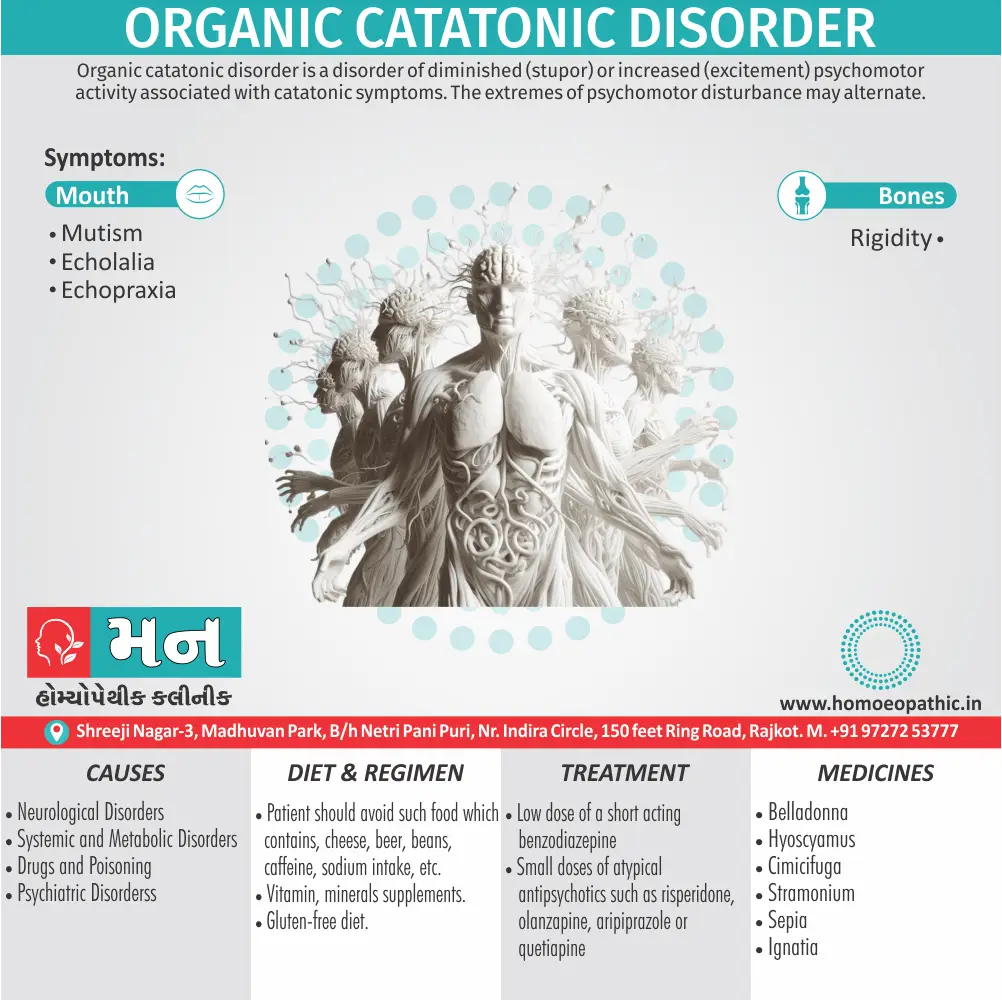
Organic catatonic disorder is a disorder of diminished (stupor) or increased (excitement) psychomotor activity associated with catatonic symptoms. Additionally; The extremes of psychomotor disturbance may alternate. [2]
There aren’t many direct synonyms for "organic catatonic disorder" because it’s a specific medical term. However, here are some options depending on the context:
- Medically induced catatonia: This emphasizes the cause being a medical condition.
- Organic mental disorder with catatonic features: This is broader and describes a decline in mental function with catatonic symptoms due to a physical cause.
- You can use terms related to specific symptoms: For example, stupor, mutism, waxy flexibility (depending on the prominent features).
Additionally, some historical terms might be encountered:
- Brain syndrome with catatonic features
- Psychoorganic syndrome with catatonia (These terms are less common now)
Important Note: These terms are for informational purposes only. If you’re looking for medical advice, consult a healthcare professional.
Frequently Asked Questions (FAQ)
What is Organic Catatonic Disorder?
It is a disorder of diminished (stupor) or increased (excitement) psychomotor activity associated with catatonic symptoms.
What causes Organic Catatonic Disorder?
- Neurological Disorders
- Systemic and Metabolic Disorders
- Drugs and Poisoning
- Psychiatric Disorders
Can Organic Catatonic Disorder be prevented?
Prompt diagnosis and management of underlying medical conditions can help prevent the development of Organic Catatonic Disorder.
What are the symptoms of Organic Catatonic Disorder?
- Mutism
- Rigidity
- Negativism
- Posturing
- Stupor
- Echolalia
- Echopraxia
- Waxy flexibility
How is Organic Catatonic Disorder diagnosed?
Diagnosis involves a thorough medical evaluation to identify the underlying cause, including physical exams, lab tests, and imaging studies.
Can homeopathy help with Organic Catatonic Disorder?
Homeopathy might offer supportive care by addressing some symptoms associated with catatonia, but it should never replace conventional medical treatment for the underlying cause.
How does homeopathic treatment work in conjunction with conventional medical care?
Homeopathy may be used alongside conventional treatment to potentially support overall well-being and manage specific symptoms. However, it should never replace necessary medical interventions.
Are there any risks or side effects associated with homeopathic treatment for Organic Catatonic Disorder?
When used correctly, homeopathic remedies are generally considered safe. However, consulting a qualified practitioner is vital to ensure appropriate use and avoid any potential interactions with other medications.
What homeopathic remedies are used for catatonic symptoms?
Homoeopathic Medicines For Organic Catatonic Disorder
Remedies like Hyoscyamus niger, Stramonium, and Veratrum album might be considered based on the individual’s specific symptoms, but their use should be guided by a qualified homeopath.